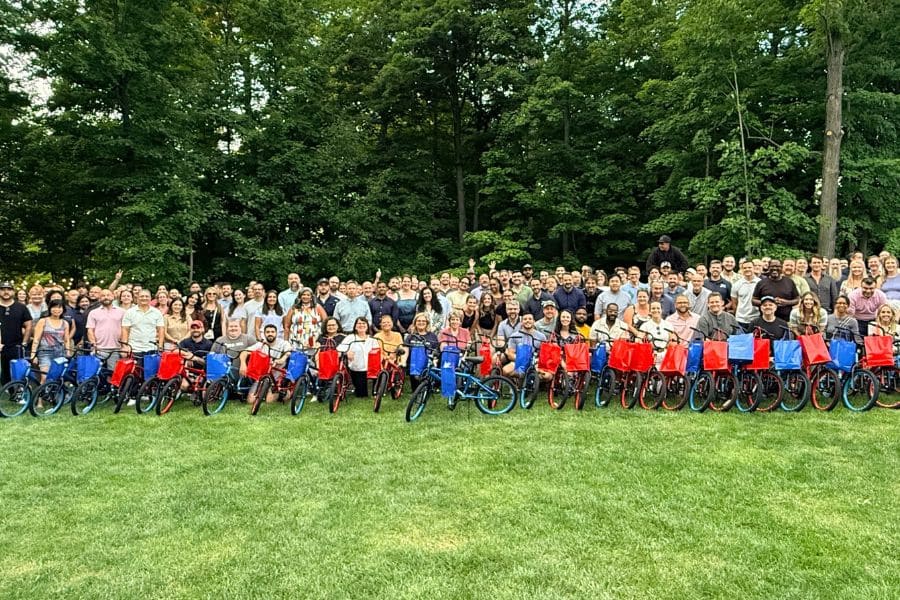
Some of the best examples of leadership qualities happen when managers hear something uncomfortable. On Nov. 5, 2025, 21 L’Oréal managers gathered in Berkeley Heights, New Jersey, for leadership and management training. They had come from all over the country. Before the offsite, their own teams had told them what they needed from their supervisors.
That kind of feedback can sting. These managers chose to act on it. After the training, Rebecca Rivas, one of our Master Trainers, led them through a Build-A-Bike® event. Teams raced to earn parts and assemble bikes. The challenges forced them to rely on teamwork and clear instructions, the very skills their teams had asked for. At the end, four bikes went to local families through the United Way of Greater Union County. You can read the full L’Oréal story here.
The Leaders Institute® has taught leadership classes since Doug Staneart started teaching in Dallas in 1998. Over that time, we have seen that good leaders share a handful of qualities. Below, you will find real examples of leadership qualities at work and interview questions that reveal them. After that, you will learn how we help managers build those qualities and which team activities show them in action.
Examples of Leadership Qualities at Work
Leadership qualities are the habits that make people want to follow you. They are easiest to understand when you see them in everyday situations.
Building trust. A new manager inherits a team that doesn’t trust leadership. Instead of announcing big changes, she spends her first two weeks meeting each person. She asks what is working and what isn’t. Trust starts there, because people feel heard before anything changes.
Coaching instead of criticizing. An employee misses a deadline. A critic says, “This is unacceptable.” On the other hand, a coach asks, “What got in the way, and what would help next time?” Both leaders care about the deadline. Only one of them makes the next deadline more likely.
Reinforcing what goes right. When a team member handles an angry customer well, a good leader notices and mentions the specific thing she did. “Repeating his concern back to him calmed the whole call.” As a result, specific praise tells people exactly what to repeat.
Making the hard call. Two projects need the same people. A leader weighs both, decides, and then explains why.
Staying calm under pressure. A big client threatens to leave. A strong leader gathers the facts, sets a plan, and keeps the team focused. Panic is contagious. However, so is calm.
Building other leaders. For instance, a great manager hands off a meeting to a junior team member and coaches her through it. The goal is a team that doesn’t fall apart when the boss takes a vacation.
Each of these examples of leadership qualities is a behavior, not a personality trait. That matters, because behaviors can be learned. In fact, most of the strongest leaders we have trained did not start as natural leaders.
Interview Questions for Leadership Qualities
If you are hiring or promoting a manager, ask questions that pull out real examples. Hypothetical questions get rehearsed answers. Questions about past behavior show how someone actually leads.
- Tell me about a time a team member brought you bad news. What did you do first?
- Describe someone you coached who later succeeded. What did you do to help?
- Tell me about a decision you made that your team disagreed with. How did you handle it?
- What is a mistake you made as a leader, and what did you change afterward?
- How do you recognize good work on your team? Give a recent example.
Next, listen for specifics, such as names, numbers, and what happened next. Vague answers usually mean the candidate hasn’t done it yet. Also, notice whether they give credit to their team. Finally, watch their pronouns. Strong leaders say “we” about wins and “I” about mistakes.
A few answers should raise a red flag. For example, be careful with a candidate who can’t name a single mistake. Also be careful with one who blames every problem on a past boss or team. Neither answer shows the self-awareness that good leaders need. Strong candidates, on the other hand, tell real stories that include a misstep, a lesson, and a change. Those stories are some of the clearest examples of leadership qualities you will hear in an interview.
How We Train Managers to Lead
Most managers are promoted because they were great at their old job. Unfortunately, very few get trained for the new one. As a result, many learn leadership by trial and error, and their teams pay for the errors. Our High Impact Leaders course exists to close that gap.
The course runs 12 hours over four weeks, built on simple daily habits. Each week focuses on one set of leadership qualities.
- First week. Build trust and improve communication, including listening and one-on-one skills.
- Second week. Resolve conflict and turn mistakes into lessons. This week also covers running meetings that get results.
- Third week. Create a team culture, with a focus on coaching versus criticism and reinforcing positive behavior.
- Final week. Build leaders around you, then graduate with a leadership certificate.
We spread the course over four weeks on purpose, since habits need repetition. A one-day seminar can be inspiring, but most people forget it by the next Monday. In contrast, a habit practiced daily for 28 days tends to stick. Participants try each new skill at work between sessions, then come back and report what happened. They also get personal feedback from a leadership coach. By graduation, most participants can point to real examples of leadership qualities they have practiced at work, not just read about.
In addition, every participant receives a copy of Doug Staneart’s book, 28 Ways to Influence People. It gives them simple, practical tools to keep using after the class ends. Learn more on the High Impact Leaders course page.
Team-Building Activities That Reveal Leadership Qualities
Training teaches leadership qualities. Meanwhile, team activities let people practice them while you watch. Under a little time pressure, people show how they really lead.
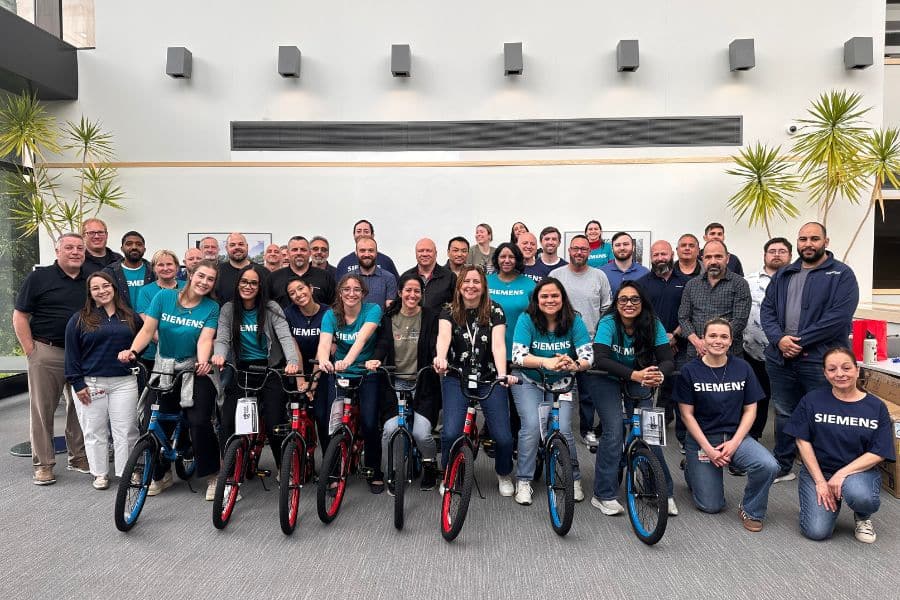
Siemens saw this firsthand at its Morristown offices in May 2026. Its management leaders had registered for the day with no idea what the activity would be. It turned out to be Build-A-Bike®. Rebecca Rivas led the event, and teams raced to earn parts and build eight bikes. The bikes went to local kids through Cornerstone Family Programs and Morristown Neighborhood House. Read the Siemens story here.
Here are a few of our activities that bring leadership qualities to the surface. Each one works for groups from about 15 people to several hundred.
Build-A-Bike®. Teams must divide tasks, share information, and keep everyone involved. Natural organizers step up fast, while quieter people often surprise everyone. Because the bikes go to local kids, the activity also shows who leads with heart.
Camaraderie Quest. This scavenger hunt, modeled on The Amazing Race, forces teams to plan a route and make quick calls. You will see who decides, who listens, and who keeps the group together when things go wrong.
Charade Murder Mystery. No single person holds all the clues. Leaders who pull information from quiet teammates tend to solve the case first.
After any activity, ask a few debrief questions. Who took charge, and how did that help? Whose idea changed the outcome? What will each of us do differently at work? Those answers connect the activity to real leadership growth. Also, share the answers with the managers’ own bosses, so the lessons carry back to the office. For more ideas, visit our charity team-building page.
Build the Leaders Your Team Needs

The examples of leadership qualities in this post all come down to behavior. Good leaders build trust, coach instead of criticize, reinforce what goes right, stay calm, and develop the people around them.
First, ask your team what they need from you, just as the L’Oréal managers did. A short anonymous survey works well. Keep it to three questions, such as what you should start, stop, and keep doing. Pick one quality to work on, and practice it every day for 28 days. Then put your team in an activity where they can lead, and talk about what you saw afterward. Over time, you will spot more examples of leadership qualities in people you never thought of as leaders. Those are the people to develop next, because every strong team needs more than one leader.